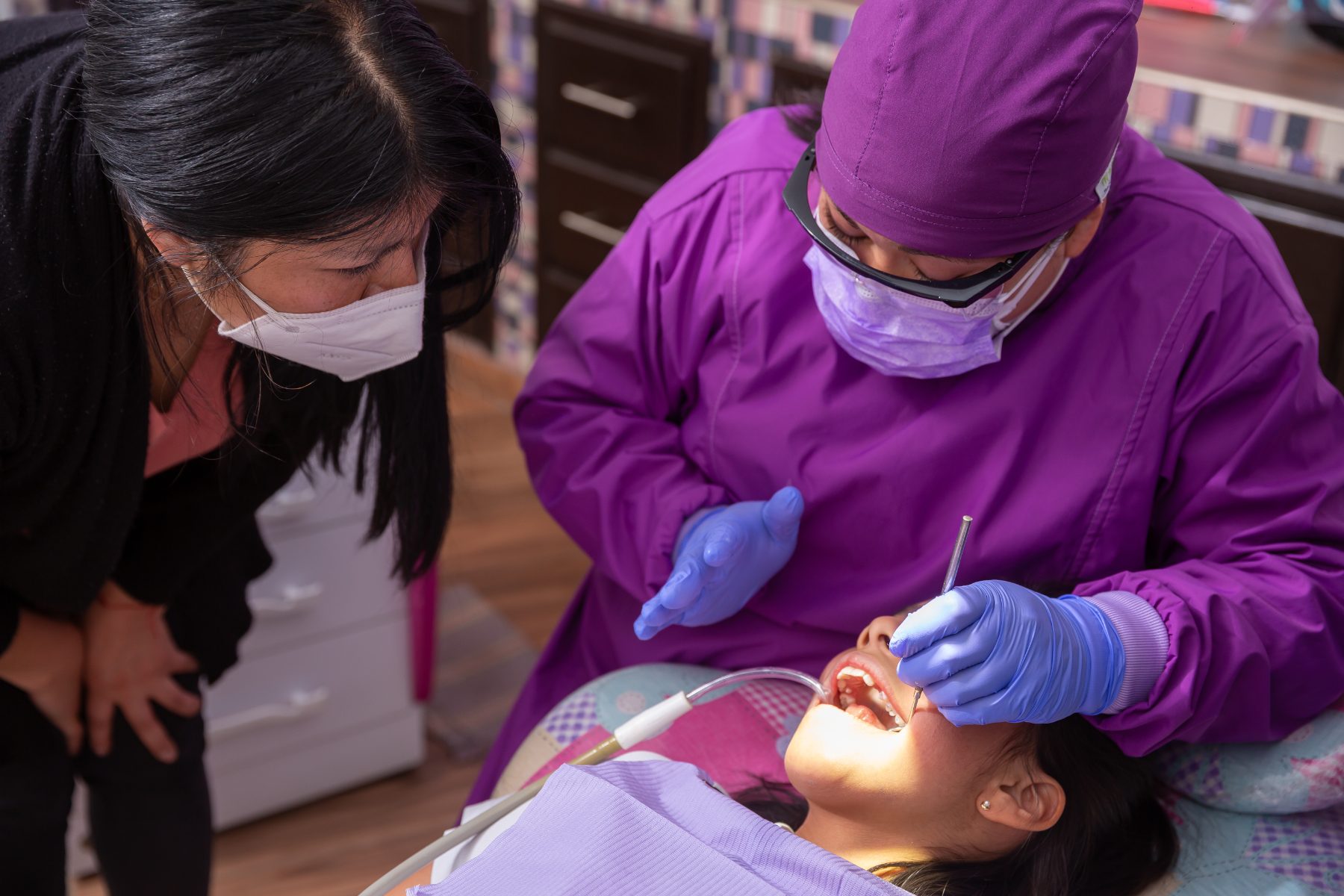


A trauma patient is in the chair
Quickly indentify the injury
Answer a sequence of questions and the pathfinder returns the correct diagnosis.
A DTG membership gives you access to
- Full trauma pathfinder
- Animated treatment guides for all injury types
- Recommendation for long-term follow-up
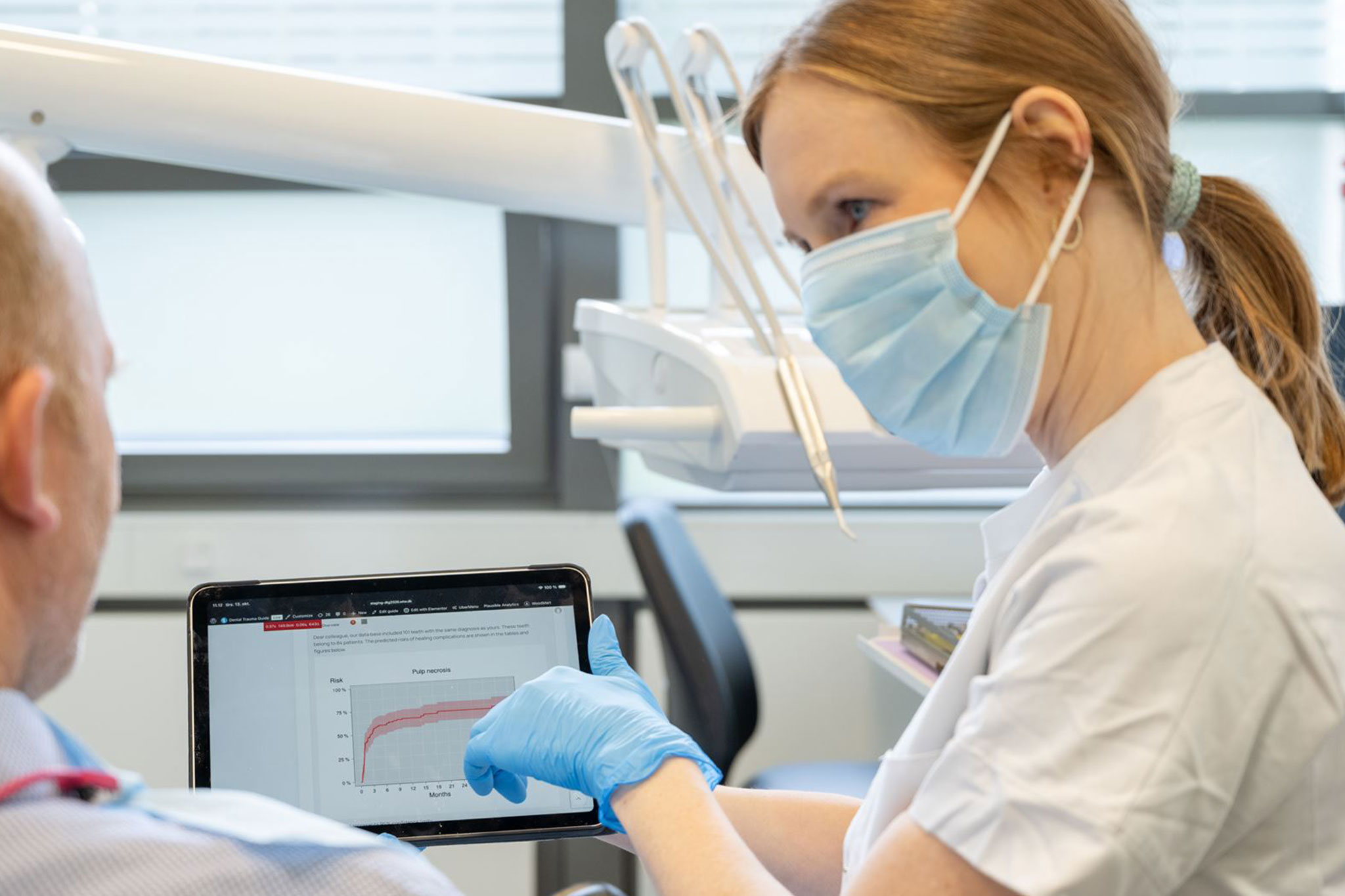
- Prognosis estimate for all injury types and combination injuries based on 4,000+ cases
45.000 members · 50+ countries
Diagnosis Found
Become a DTG member to see the diagnosis
Members get access to the full pathfinder. The full pathfinder returns the diagnosis, and a concurrent fracture can be identified by a second diagnostic pathway to a treatment guides.
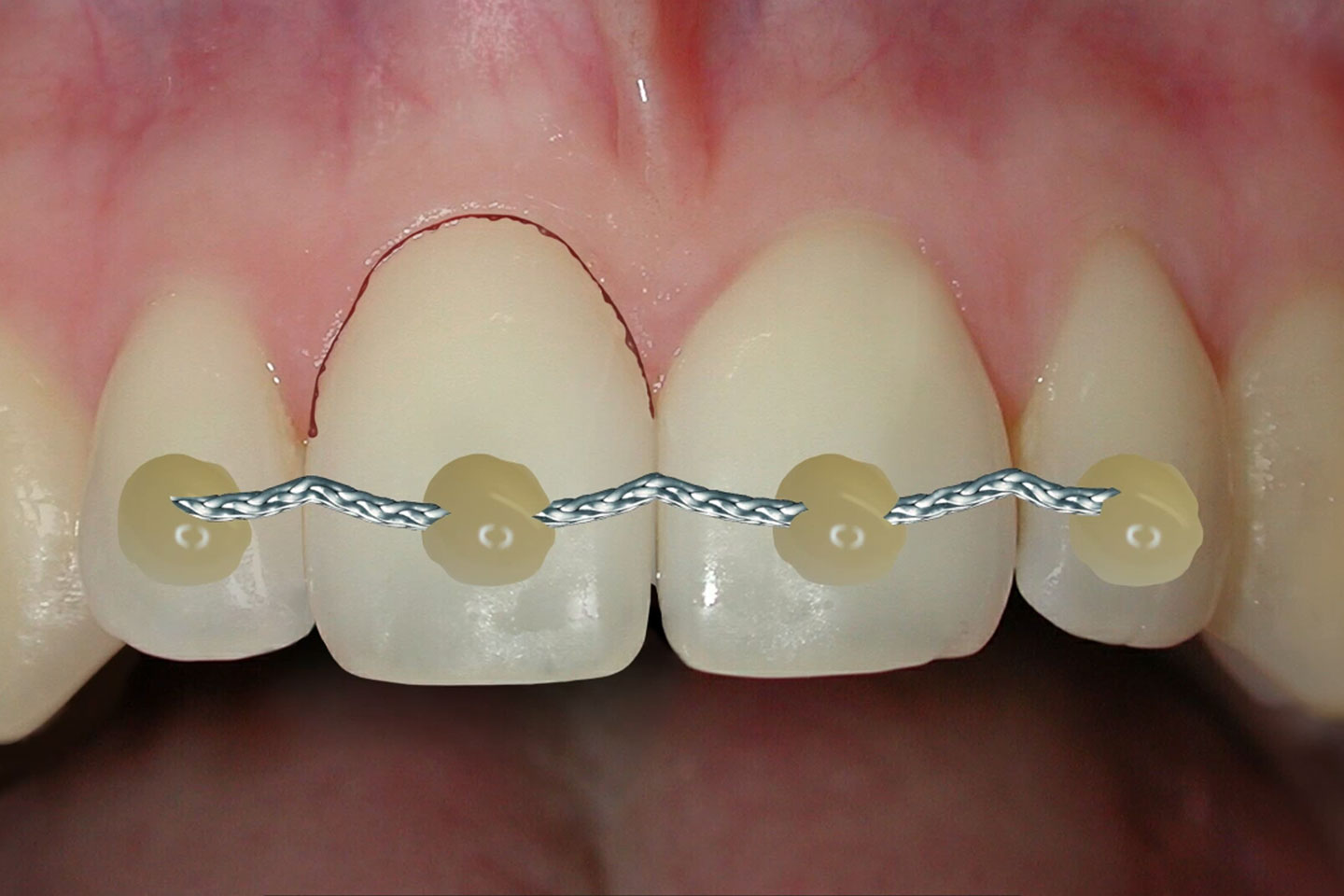
Become a memberAvulsion, from the door to the twelve-month check
One real guideline, playing through by itself. This is what one of the injuries looks like.
Get the tooth back into the socket
Replantation within 15 minutes offers the best chance of periodontal healing. The DTG guideline specifies the recommended storage media and provides instructions on how to guide the person handling the tooth while they are still on the phone.
Splint the tooth and assess the pulp
Replant the tooth and apply a flexible splint for two weeks, following the step-by-step protocol. Whether the pulp should be monitored or root canal treatment initiated depends on the extraoral dry time and the stage of root development.
Know what to expect and communicate it clearly
Follow a structured review schedule, assessing for specific healing complications at each visit. The DTG guideline provides outcome data from comparable cases in the Copenhagen cohort, enabling clinicians to provide evidence-based prognostic information. It is the difference between telling a parent, “We’ll have to wait and see,” and giving them a realistic estimate based on published outcomes.
Copenhagen Symposium & Webinar 2027
Four days of dental traumatology with the Dental Trauma Guide research group and invited international speakers. Attend in person in Copenhagen or online for the webinar.
Questions before buying DTG membership
Most often the session has expired or you are on a different device. Log in above and you will be taken straight back to the page you tried to open. If the login is refused, check whether the membership has run out under My account.
All memberships prices is one year access to Dental trauma guide from purchase date, and will automatically be renewed. — you can cancel at any time and still have access the remanding period. Groups, clinics and dental schools are priced per seat and will be invoiced on institution terms.
The IADT guidelines are a short treatment summary. The Dental Trauma Guide gives you the ability to diagnose both the primary and maybe a secondary the injury via the trauma pathfinder. And gives both written and animated treatment guidelines for alle injury types. With steps by step procedures, fixed follow-up intervals, and prognosis from more than 4.000 patient cases.
It is based on outcomes recorded in the Copenhagen trauma cohort. Injury type, tooth, patient age at the time of injury and the treatment given are matched against comparable cases with long-term follow-up.
Yes, of cause. You can buy access for 1-9 members with a shared login as individual membership. Or you can buy a group membership. Where it is possible to have many users with access to the Dental Trauma Guide. All members are managed by one administrator. Group and institution memberships are priced per seat with central administration and invoicing on institution terms.
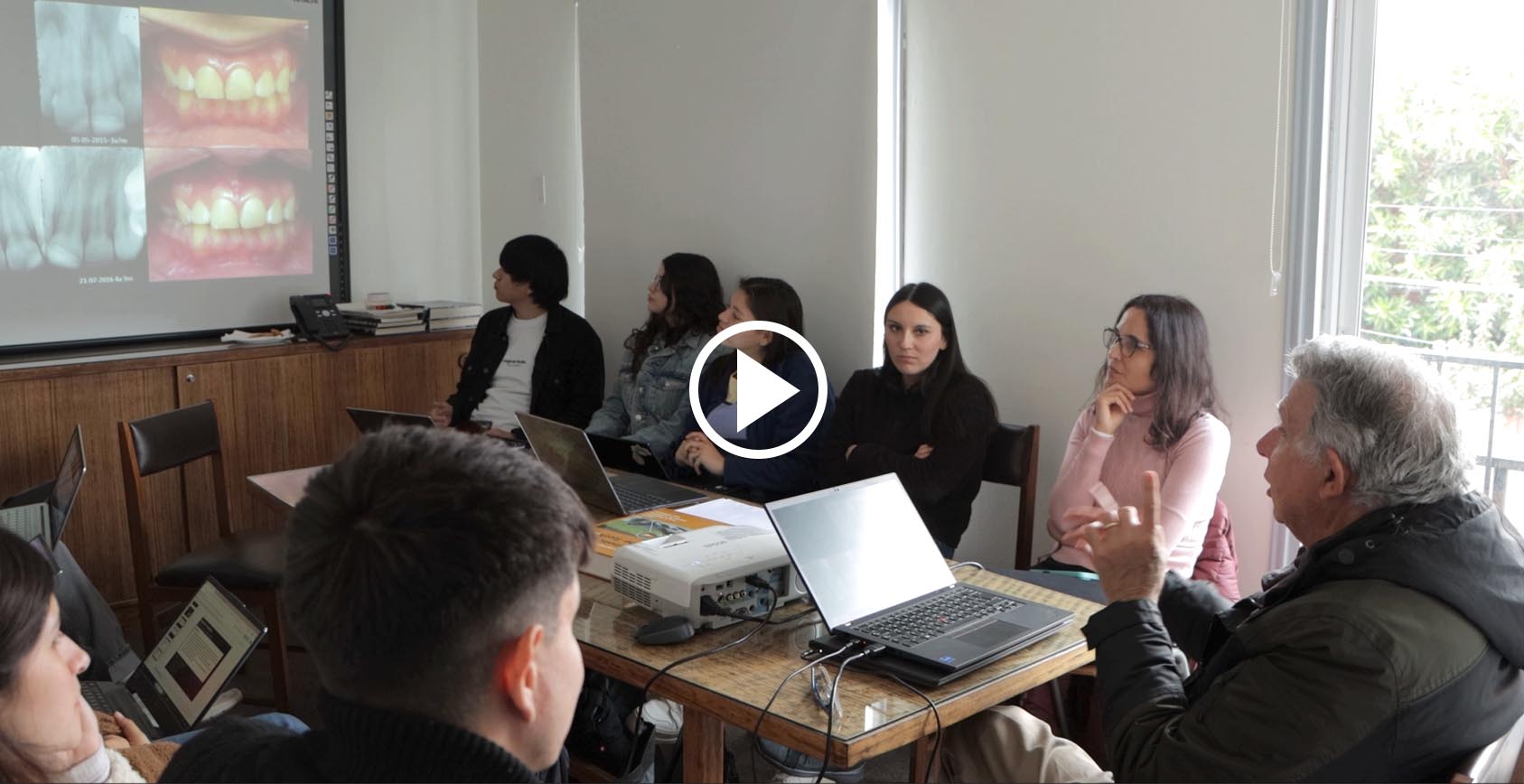
Dental Trauma Guide offers free full access for dental schools worldwide for a 2-year trial period.
By providing unrestricted access, we aim to give students and faculty a reliable, evidence-based tool that supports both theoretical teaching and clinical decision-making.
Full access for one user.
- Full trauma pathfinder with both primary and secondary diagnostic pathway
- Step by step animated treatment guides for all injury types
- Recommendation for long-term follow-up
- Prognosis estimate for all injury types and combination injuries
- Guidelines in seven languages
- Certificate of membership
“So, the Dental Trauma Guide has been invaluable to improve the management of dental trauma, and thereby, the outcomes of dental trauma.”
Trauma doesn’t happen at a convenient time where you got a slot in your diary: So, when the patient turns up to the clinic, you have to accommodate them and find out the treatment, if you don’t already know it.
As soon as I knew I was taking the trauma service on, I looked around to see where I could get information and start educating myself: And the Dental Trauma Guide was the obvious place.
If you get caught in the middle of a busy clinic, and you see a trauma, and you haven’t read that chapter in the book yet, but you want to know how to manage it to manage the patient: Go in to the computer, your Ipad or your phone to access The Dental Trauma Guide is very quick and easy.
Some dentists might not want the patient to see them flicking through the book to see how to manage their trauma: It may not instil confidence. So, there’s no reason why it can’t be on all of the computers, so that the dentist could easily just say “I’m just gonna pop out”, pop out and check The Dental Trauma Guide in the reception area and then go back in with confidence.
“Dental Trauma Guide is a must, I think, for every dentist.”
I hate the feeling of saying: “I wish I would’ve done this, or wish I would’ve done that” So, when we have a guide, It will give us more confidence on how to treat this particular child.
Not having up to date information means we are doing trial and error, doing experiments on our patients, which is unethical, I think. So, if it was my child, I would like to give them the best of whatever is available.
“The information is presented in a concise and consistent way, making it highly accessible and easy to understand.”
The Dental Trauma Guide makes all relevant information about dental trauma easily accessible, from clinical assessment and radiographic evaluation to risks and prognosis. For example, when a pulp test is needed, the guide helps you quickly find the necessary information, understand the injury as a whole, determine the appropriate course of action, and know what to expect.
I have been familiar with the Dental Trauma Guide for the past five to six years. One of its key strengths is that it explains clinical concepts clearly and efficiently, often in just a few sentences, rather than requiring the reader to work through extensive textbook chapters.
When you are uncertain about how to manage a particular case, the Dental Trauma Guide helps you identify the type of injury affecting the tooth or jaw through the Trauma Pathfinder. It is a valuable tool to have available in everyday patient care.
“So actually, in many ways, Dental Trauma Guide has made a difference, when encountering trauma patients.”
Dental trauma is quite a large field to master, both theoretically and clinically. So, it’s not always the easiest to keep everything in your head at once. With Dental Trauma Guide, we actually have clear summaries of the diagnosis and a structural, accessible way to get information about the treatment procedures.
We actually have computers in every treatment room, so we can quickly get access to Dental Trauma Guide through that computer. Sometimes if I need a specific picture I can show them on the computer: “This is how your tooth looks right now, and this is what we are going to do” and so on. Sometimes it’s quite helpful to have the pictures for the understanding of the patients.
When treating patients, you can both have a quick repetition of the diagnosis, and also the treatment procedures, and I think it’s also a good introduction to the dental trauma field when studying. Partly due to the clear structure, and as well as the reference list it offers, so you can then deepen your knowledge about certain subjects of interests you have:
Latest news
Be ready when the next trauma walks in
US$60 for one year for full access to every guideline, traumapathfinder, animated treatment steps and the prognosis figures.